September 8, 2026 · 11 min read
AI Builds Beautiful Websites. Beautiful Doesn't Rank.
AI can build a beautiful website. That is not marketing spin, it is just true — the layouts are clean, the spacing is right, the photography looks expensive, and it happens in days instead of months. Anyone telling you otherwise has not looked recently.
Here is the but, and it is a big one: AI only builds what it is prompted to build. A prompt that asks for a stunning homepage produces a stunning homepage. It does not produce a site structured to be found, quoted, crawled and loaded fast, because nobody asked for those things. And a business that replaces a working website with a prettier one that was never prompted for performance can end up with fewer leads than it started with.
That is the actual risk of AI websites. Not that the design is bad. That the design is the only thing anyone specified.
The part everyone gets right
Design was the hardest thing to buy cheaply for twenty years. A custom look meant a designer, a developer, revision rounds, and a five-figure invoice. AI collapsed that. Today a good tool with a decent prompt will hand you a layout that looks like it came from a studio.
So the visual bar has moved. A pretty site is no longer a differentiator, it is table stakes. Your competitor down the road has one too, and theirs took a weekend.
Which means the question worth asking about any new website is no longer whether it looks good. It is whether anything under the surface was built on purpose.
AI only builds what it is prompted
An AI builder is not making judgment calls about your business. It is executing instructions. Ask for a modern homepage for a roofing company and you will get one — hero image, three service cards, a testimonial strip, a contact form. Every one of those decisions traces back to the prompt.
Now list what a prompt like that never mentions. It never says which twelve services need their own page. It never says which nine cities you serve and that each one needs real local detail. It never asks for a page title and description written per page, or schema that tells a machine what kind of business this is, or copy shaped so an answer engine can lift a sentence and attribute it to you. It never sets a performance budget for images and fonts.
None of that is a limitation of AI. It is a limitation of the instructions. The model will happily build all of it — the day someone knows enough to ask.
The one-line version
AI is not a strategist. It is the fastest builder you have ever hired, and it builds exactly the thing you described. If performance was not in the description, it is not in the site.
The risk nobody warns you about: going backwards
Most people assume the worst case of a bad website is a neutral one — you spent some money, you got a nicer look, nothing improved. That is not the worst case. The worst case is that the new site performs worse than the old one, and the old one is gone.
Here is how that happens in practice. The previous site had 30 pages that had been indexed for years. The new one has six, because six looked cleaner. Twenty-four URLs now return nothing, and every ranking and every link attached to them evaporates. No redirects were set up, because nobody prompted for redirects.
Or the copy got tightened into slogans. "Fast, friendly, reliable" reads beautifully and says nothing a search engine can match to a query or an answer engine can quote. The old page said "emergency water heater replacement in Palm Coast, same day, from $1,450." That sentence was doing real work. It is not there anymore.
Or the design leans on four full-screen photos and three custom fonts, and the site takes six seconds to become usable on a phone on a cell connection — which is how most local customers arrive. Speed is a ranking input and a conversion input at the same time, so you lose twice.
A month or two later the calls slow down. Nobody connects it to the redesign, because the site looks better than it ever has. That is the trap: the failure is invisible from the outside.
Design is one slice of four
How a site looks and feels — UX — matters. It just is not the thing that decides whether anyone ever sees it. Four things decide that, and design is one of them.
SEO: can a search engine understand and index you?
Server-rendered HTML rather than content that only appears after JavaScript runs. A unique title and description on every page. One clear H1. Internal links that connect services to cities to blogs. A sitemap and a robots file that agree with each other. Clean, permanent URLs, and redirects when they change. Miss these and your best page might as well not exist.
AEO: can an answer engine quote you?
Answer engine optimization is the newer half. AI Overviews, ChatGPT and Perplexity do not hand out ten blue links — they compose an answer and attribute it to a source. To be that source you need pages that answer one specific question directly in the first sentence, in plain text, with real specifics: prices, timelines, service areas, what is and is not included. Vague brand copy is unquotable.
AI-readiness: can a machine parse what you are?
Structured data that declares the business type, services, areas served and reviews. Consistent name, address and phone everywhere. An llms.txt file so AI crawlers get a plain summary of who you are. Content that is not locked inside images or embedded widgets. This is the difference between a machine guessing about you and a machine knowing.
Page speed: does it load before they leave?
Compressed, correctly sized images. Fonts that do not block the first paint. Not shipping a megabyte of JavaScript to display a phone number. On mobile, every extra second costs conversions — and Google measures it.
A site can score perfectly on the first slice and zero on the other three. That is precisely what an unguided AI build produces: a gorgeous shell with nothing behind it.
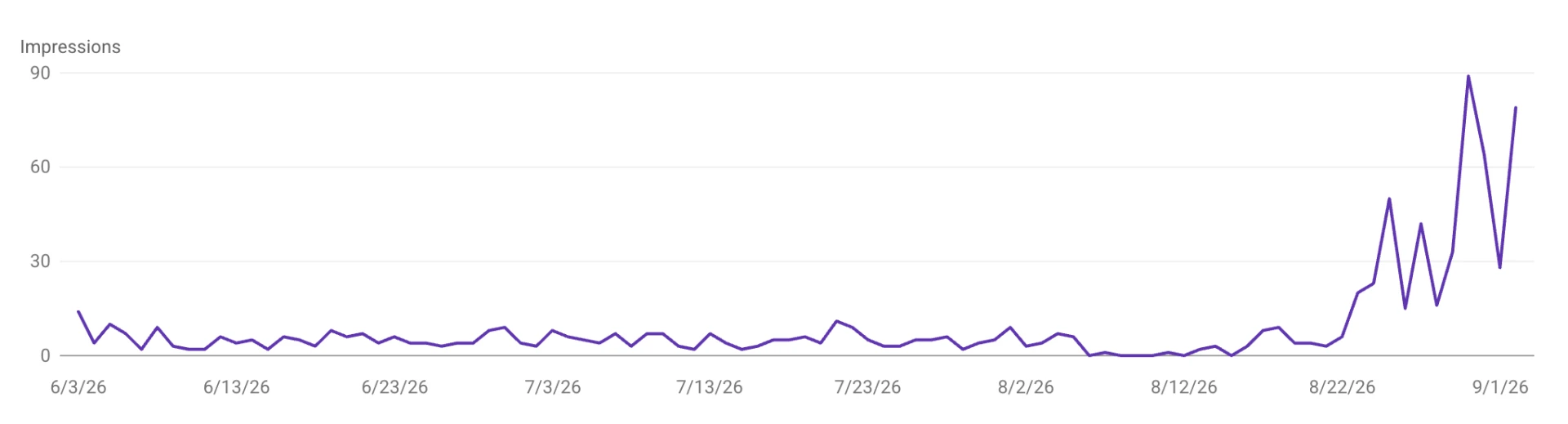
Why our AI builds actually perform
We use AI. We are not shy about it — it is why a 34-page site is a four-figure project here instead of a five-figure one, and why builds take days instead of a quarter.
The difference is the instructions. Our founder has spent more than twenty years building performance websites and doing SEO for businesses that lived or died on inbound calls. Every prompt, template, page structure and content pattern we use carries that experience inside it. The tool is the same tool anyone can buy. What goes into it is not.
Practically, that means the build starts from a page plan rather than a homepage: which services need their own page, which cities you actually serve, what each page has to answer, how they link to each other. Then the technical layer goes in by default — server-rendered pages, per-page titles and descriptions, schema, direct-answer copy, sitemap, robots, llms.txt, compressed images, a real speed budget. Then it gets checked, by people in the US, against what your business genuinely charges and does.
Nothing on that list is optional or upsold. It is what "built" means here.
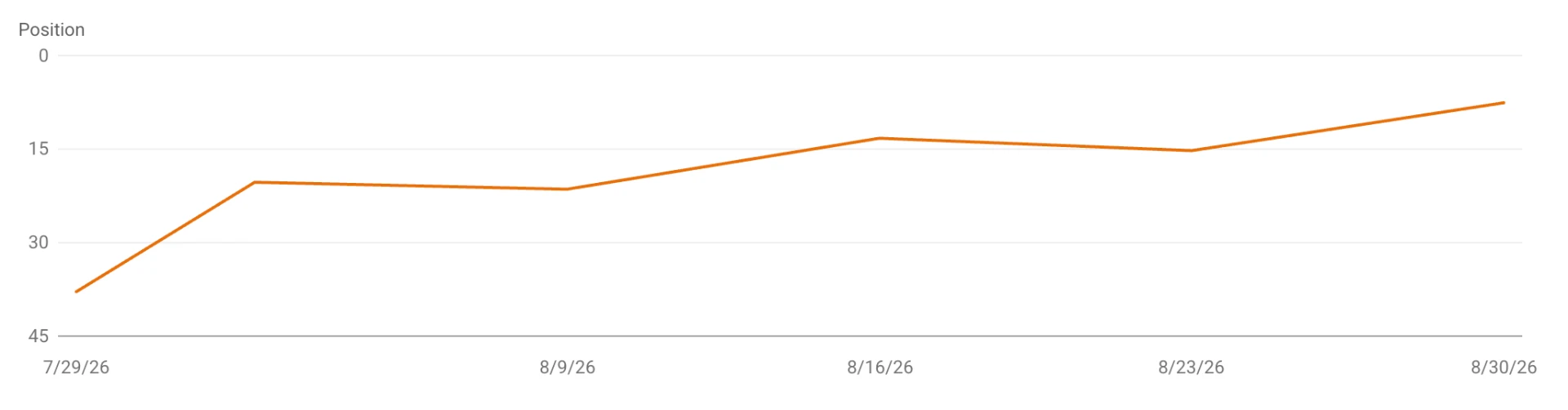
What is included, and what you actually pay for
So you can hold anyone else to the same standard, here is our whole structure in public.
- One-time build: $750 for up to 5 pages, then $50 per additional page. SEO, AEO, AI-readiness and speed work are inside that fee — never a separate line item, never a retainer.
- Hosting: $50 per month, hosting fees only — first bill 30 days after checkout. Updates and changes are not bundled in; you submit a ticket and pay only for that change.
- Revisions: you pay only for the changes you actually want, when you want them. No monthly design retainer sitting there whether you use it or not.
- Extra pages later on an existing site: $50 each, no minimum, no maximum.
- 30-day 100% money-back guarantee on our fees, and no sales calls at any point.
The reason we can price performance as standard rather than as an add-on is the same reason the risk exists in the first place: AI made the production cheap. We put the savings into the parts of the site you cannot see.
Nine checks to run on any AI-built site
Run these against a site you are about to buy, or the one you just launched. No tools required for most of them.
- Does every service you sell have its own page, with specifics on it?
- Does every city you serve have a page with genuinely local detail, not a swapped city name?
- Are the page titles and descriptions different on every page?
- Does the first sentence of each page answer the question that page exists for?
- Are your prices, timelines and service areas written in plain text somewhere?
- If pages were removed in a redesign, do the old URLs redirect to new ones?
- Does the site have a sitemap, a robots file and structured data?
- Does it become usable in under about two seconds on a phone?
- Ask ChatGPT or Google an AI question your business should own. Does your name come up?
A no on the first eight is fixable. A no on the ninth is the score.
Find out where you stand
You do not have to guess at any of this. Our free audit crawls your current site and grades it on SEO, AEO, UX and page speed, tells you how many real pages and blog posts you have, and prices a like-for-like rebuild along with what you would save over 12 and 24 months. It takes a couple of minutes and there is nobody on the other end waiting to call you.
If you already know the site needs to be rebuilt and the question is scope, run the Page Planner instead — it works out how many pages your business actually needs before a single word gets written.
FAQ
Questions people ask about this
- Are AI-built websites bad?
- No. AI-built sites can be excellent, and ours are built with AI. The risk is that AI only produces what it was prompted to produce. If nobody specified SEO, AEO, AI-readiness and page speed, the site will look great and underperform, and that has nothing to do with the technology.
- Can a new website actually perform worse than my old one?
- Yes, and it is common. Cutting a 30-page site down to six pages without redirects deletes years of indexed URLs and links. Replacing specific copy with slogans removes the sentences engines match and quote. Heavy imagery slows the site on mobile. All three can happen while the site looks better than ever.
- Isn''t good design enough to get leads?
- Design decides whether visitors trust you and convert. It does not decide whether anyone arrives. Being found depends on SEO, AEO, AI-readiness and page speed. A beautiful site nobody reaches produces no leads.
- What makes your AI websites different?
- The prompts. Our founder has over 20 years of experience in SEO and performance-driven websites, and that experience is written into the page structures, content patterns and technical defaults we build from. Same category of tool, very different instructions — and every build is checked by people in the US against what your business really does and charges.
- Is SEO or AEO an extra cost?
- No. SEO, AEO, AI-readiness and speed work are all included in the one-time build fee on every site we build. Hosting is $50 a month, and revisions are pay-as-you-need rather than a standing retainer.
- How do I check my current site?
- Run our free audit. It crawls your site, scores SEO, AEO, UX and page speed, counts your real pages versus blog posts, and prices a like-for-like rebuild with 12- and 24-month savings. There is no call and no obligation.
Check the basics yourself
Run a free audit of your current website
Titles, descriptions, page speed, mobile layout, and how readable your pages are to AI assistants — scored in a couple of minutes, with no email required.