October 5, 2026 · 7 min read
SEO and AEO Together: One Site, Two Kinds of Search
You do not choose between SEO and AEO. They run on the same site, the same content and mostly the same technical foundation — the difference is that SEO competes for a position people click and AEO competes to be the source a machine quotes. One build can win both, and treating them as two purchases is how retainers get stacked.
This post lays out exactly what is shared, what is genuinely different, and the order to do the work in so you are not paying twice for the same page.
Two finish lines, one track
SEO’s finish line is a ranked position: be high enough on the results page that someone clicks. AEO’s finish line is attribution: be the source named inside an AI Overview, a ChatGPT answer or a Perplexity citation, where there may be no list of links at all.
Both require that a machine can reach your page, read it, and judge it credible. That shared requirement is the majority of the work, which is why nobody should sell you AEO as a separate discipline with its own invoice.
What serves both at once
This list is the overlap. Every item helps rankings and citations simultaneously.
- Server-rendered content a crawler can read without running scripts.
- Fast mobile pages and healthy Core Web Vitals.
- One page per service, plus real pages for the towns that matter.
- Clean titles, one H1, descriptive headings, sane internal links.
- Structured data: LocalBusiness, Service, FAQPage.
- Sitemap, robots.txt, correct canonicals, and an llms.txt file for AI crawlers.
- Consistent name, address, phone, hours and service areas everywhere.
- Reviews and third-party mentions that let a machine verify you exist.
If any of those are missing, that is your bottleneck for both kinds of search. Fixing them is not an AEO project; it is a build.
Where they actually differ
Four differences are real and worth handling deliberately.
- Answer placement. SEO tolerates a conclusion at the end; AEO needs the answer in the first two sentences under each heading.
- Heading style. Ranking accepts “Pricing”; citation prefers “How much does a roof replacement cost in Palm Coast?”
- Specificity. Clicks can be won with persuasion. Citations require verifiable facts — numbers, ranges, places, timelines.
- Measurement. SEO has rank tracking and Search Console. AEO has you asking the engines your own questions and logging who gets named.
Practical translation
Keep every SEO habit you have. Then move each answer to the top of its section, turn labels into questions, and replace adjectives with numbers.
The order to do the work
Sequence matters, because later steps depend on earlier ones.
- First, technical: server rendering, speed, sitemap, robots, canonicals, analytics and conversion tracking.
- Second, structure: the right pages for your services and towns — the page planner will give you the list.
- Third, content: answer-first copy, question headings, prices and specifics, FAQ blocks.
- Fourth, markup: schema that labels facts the pages now actually state.
- Fifth, evidence: reviews, listings consistency, local mentions.
- Sixth, measurement: track calls and forms, and log AI answers monthly.
Doing content before structure is the most common wasted effort — great copy on a page that should not exist, or missing from a page that should.
Where they can pull against each other
Honest caveat: AEO can cost you clicks. If your page answers “what does a permit cost in Flagler County” so cleanly that the AI answer suffices, the reader may never visit. That is a real trade, and it is why informational content should always lead somewhere — a quote, a planner, a booking step — rather than ending at the answer.
The reverse tension exists too. Chasing thin traffic with fifty near-duplicate pages can lift session counts while making your site look less trustworthy to both engines and buyers. Fewer, more specific pages beat volume in local markets.
A single build checklist
If you want one page to hand a developer or to check your current site against, this is it — every item serves rankings and citations at the same time.
- Server-rendered HTML on every page, verified by viewing source.
- Mobile Core Web Vitals in the green.
- One page per service; one page per town that produces revenue.
- One H1 per page, naming the service and the place.
- Answer-first opening under every heading; question-shaped H2s.
- Price ranges, timelines and named service areas in body text.
- FAQ block of four or five real questions per key page.
- LocalBusiness, Service and FAQPage schema reflecting the page content.
- sitemap.xml, robots.txt, self-referencing canonicals, llms.txt.
- Internal links between related service and city pages.
- Analytics plus call and form conversion tracking.
- Name, address, phone, hours and services consistent everywhere.
Twelve items. That is the entire overlap of SEO and AEO for a local business, and it is a build, not a subscription.
How to tell whether it worked
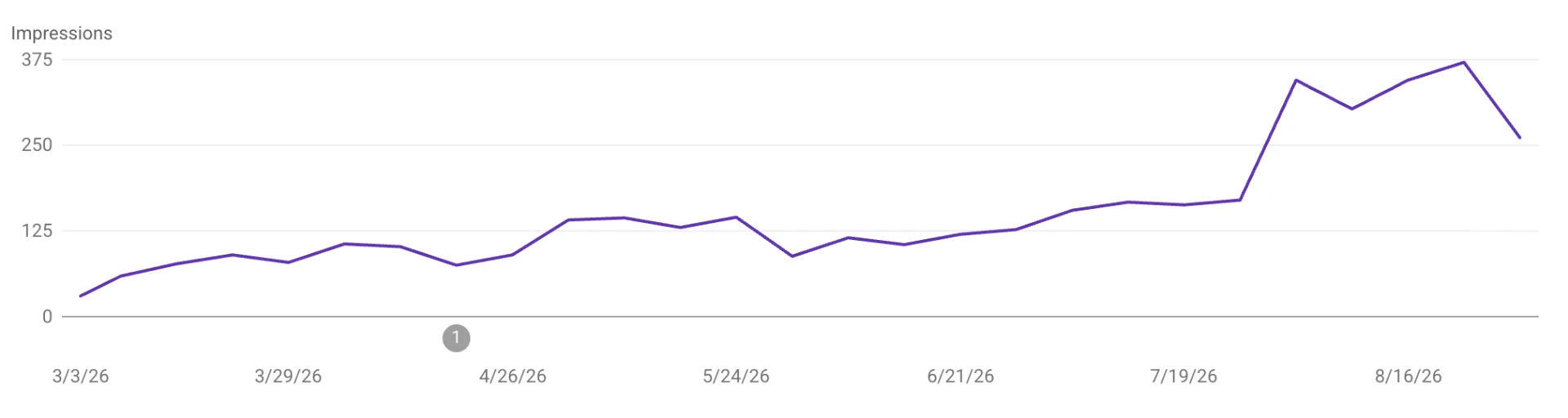
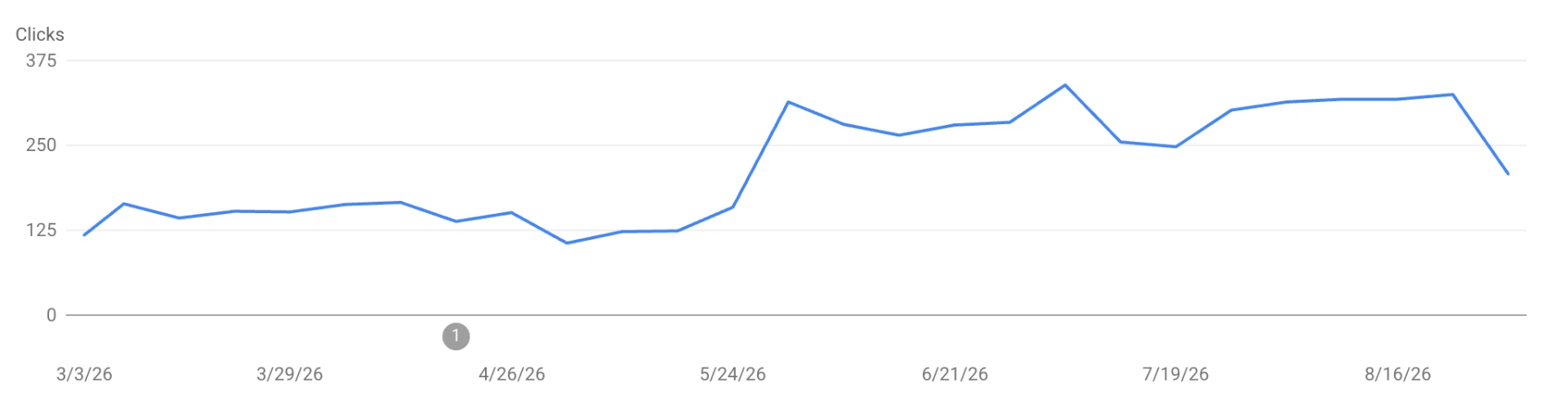
Traditional measurement still applies: impressions and clicks in Search Console, rankings for your service-plus-city terms, and most importantly calls and form submissions attributed to the site.
For the AI side, there is no dashboard worth paying for yet. What works is a monthly log: ask ChatGPT, Perplexity, Gemini and Google the ten questions your customers actually ask, and record which businesses get named. Crude, repeatable, and honest — and it will show movement within a couple of months of fixing structure.
If a provider claims precise AI-visibility tracking, ask how the number is produced. Most of it is sampling the same prompts you can sample yourself for free.
How this ships in one build
We do not price SEO and AEO separately, because separating them would mean doing the same work twice. A build is $300 for up to five pages, $50 per additional page, $50 a month for hosting — with the technical foundation, structure, schema and answer-first copy included.
There is no retainer, no contract, no sales call, and a 30-day 100% money-back guarantee. It is built in the US by people, produced with AI: software drafts and assembles, humans decide what is accurate and what ships. That is how the price works without the quality dropping.
Run the free audit to see how your current site scores on SEO, AEO, UX and page speed, and which of the six steps above you have already covered.
FAQ
Questions people ask about this
- Is AEO replacing SEO?
- No. AEO sits on top of the same foundation. What changes is that you write to be quoted, not only to rank.
- Can I do both with one website?
- Yes, and you should. Most of the work — structure, speed, schema, specific content — serves both at once.
- Which should I fix first?
- Technical foundation, then page structure, then content, then markup. Skipping ahead to content on a site machines cannot read wastes the content.
- Will AI answers reduce my website traffic?
- For simple informational questions, sometimes. Being the cited source is still better than being invisible, and buying-stage searches still produce visits and calls.
- Do I need separate SEO and AEO services?
- No. If two providers are billing you for overlapping deliverables, ask each which specific items are unique to them. The list is usually short.
Check the basics yourself
Run a free audit of your current website
Titles, descriptions, page speed, mobile layout, and how readable your pages are to AI assistants — scored in a couple of minutes, with no email required.